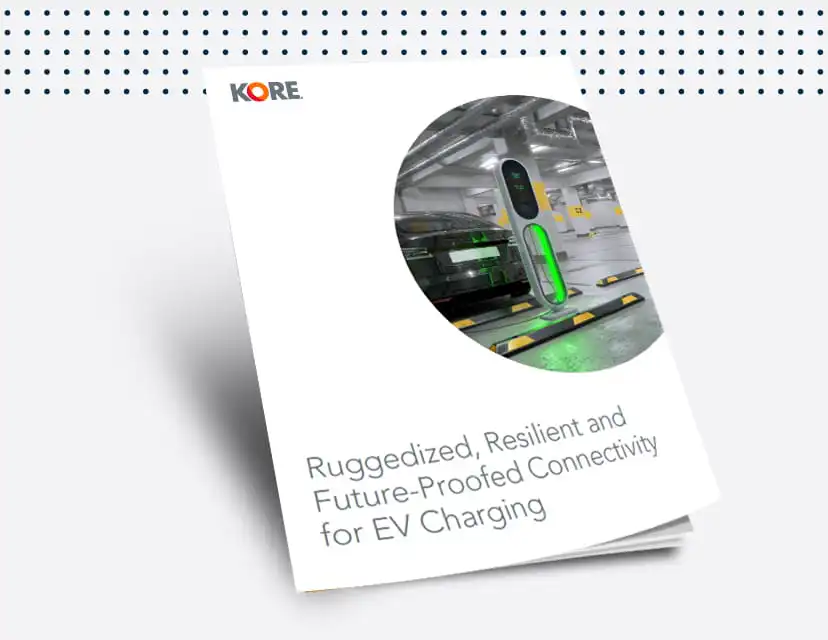
Global Connectivity and Intelligent Management to Power your EV Charging Deployments
The kore Benefit


Maximum Uptime with Redundancy
Any minute of downtime means loss of revenue for you. Our SIMs are designed for maximum reliability with multiple redundancies built into our network infrastructure. Our KORE-owned mobile network core gives you full control over network choice and deeper troubleshooting tools if ever necessary.

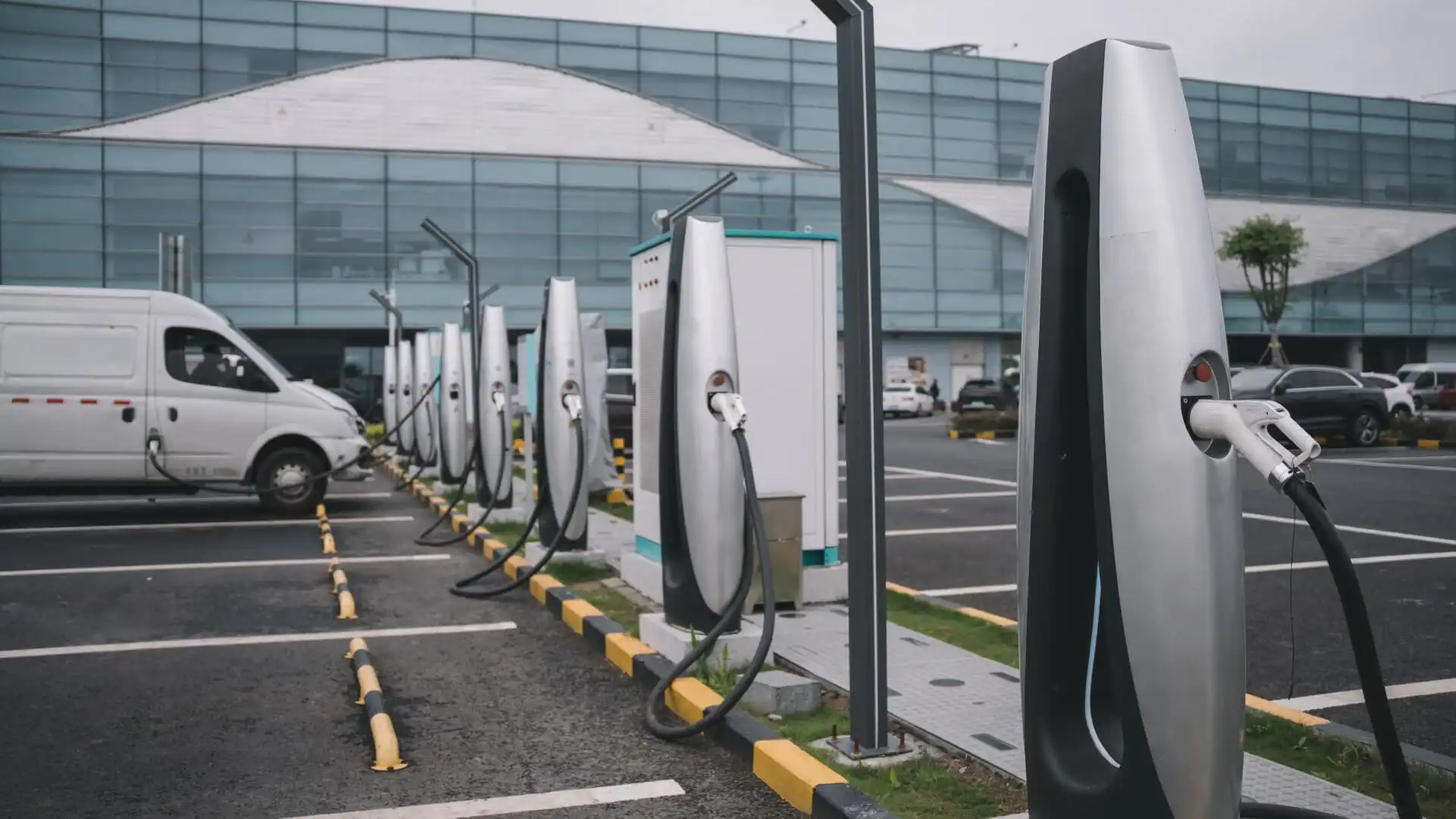
Global-Local Certified Connectivity
More and more countries impose limitations on the kind of SIM cards that can be deployed permanently in country. KORE offers local SIM profiles for Canada, Turkey, Brazil, and other affected regions of the world – and will consult you on carrier certifications and other common pitfalls of the industry.


Deepest Carrier Relationships
KORE pioneered the carrier reseller industry and continues to set the standard. Over 20 years of carrier relationships translate into unparalleled advocacy and influence, ensuring better pricing, faster issue resolution, greater network choice, and access to higher-
quality networks.
Keep Chargers Online with Resilient Global Connectivity
IoT SIM Card

One Sim to Connect your Chargers to Over 500 Networks Globally
Stop wasting time by testing carrier SIMs at every charge point. KORE’s multi-carrier solution offers global connectivity on one SIM, with one administrative and support experience, and one simple monthly bill across all networks.
Connectivity Management
One Simple Web UI to Configure and Analyze your Cellular Connectivity
KORE connectivity management provides end-to-end SIM and eSIM management, allowing full control over SIM card activation, monitoring data usage, billing, and troubleshooting, making it easy to optimize costs.
Router, Gateway, Hotspot Hardware
Source Connectivity Hardware Directly from KORE
Whether your architecture uses one SIM per charger or centralized connectivity through Bluetooth or Wifi – KORE helps with both. We are premier partners of leading manufacturers and offer central hardware management.

Frequently Asked Questions
Why is connectivity important for EV charging infrastructure?
Connectivity enables EV chargers to communicate with management platforms for functions like billing, remote diagnostics, firmware updates, and compliance with industry protocols. Without reliable connectivity, chargers can experience downtime, lost revenue, and poor user experience.
What type of connectivity is best for EV charging stations?
Cellular connectivity (4G LTE, 5G, Cat-M, Cat-1bis) is commonly used because it provides reliable, scalable, and widely available coverage. Multi-carrier solutions further improve uptime by allowing devices to switch networks when needed.
How does a multi-carrier SIM improve EV charger uptime?
A multi-carrier SIM can automatically connect to the strongest available network, reducing the risk of outages. This ensures EV chargers stay online even if one carrier experiences issues.
What is eSIM and how is it used in EV charging?
An eSIM allows remote provisioning of carrier profiles over the air. For EV charging, this means operators can deploy chargers globally and switch networks without physically replacing SIM cards.
What is OCPP and why does it matter for EV charging?
OCPP (Open Charge Point Protocol) is a standard that enables communication between EV chargers and central management systems. Reliable connectivity is essential to ensure consistent data exchange and system interoperability.
What is ISO 15118 and how does connectivity support it?
ISO 15118 is a communication standard that enables advanced features like Plug & Charge. It requires secure, reliable connectivity to support authentication, data exchange, and transaction processing between vehicles and charging infrastructure.
How does KORE ensure high uptime for EV charging networks?
KORE delivers high uptime through multi-carrier connectivity, redundant network infrastructure, and a KORE-owned mobile core that enables better control, troubleshooting, and network optimization.
What is global-local connectivity and why is it important for EV charging?
Global-local connectivity combines global coverage with local carrier profiles in specific countries. This helps EV operators comply with local regulations and avoid issues related to permanent roaming restrictions.
Can EV charging networks be managed globally?
Yes, with a unified connectivity management platform, operators can monitor, manage, and optimize chargers across multiple regions, carriers, and networks from a single interface.
How does connectivity support OTA updates and remote diagnostics?
Cellular connectivity enables over-the-air (OTA) updates and remote diagnostics, allowing operators to update firmware, troubleshoot issues, and maintain chargers without on-site visits.
What hardware is needed for EV charging connectivity?
EV charging connectivity may involve embedded SIMs, routers, gateways, or centralized connectivity hardware depending on the deployment architecture. These components ensure chargers remain connected and manageable.
How does KORE simplify EV charging deployment at scale?
KORE provides a single SIM, unified platform, and consolidated billing model, eliminating the need to manage multiple carrier relationships and simplifying global deployment.
How does connectivity impact EV charging revenue?
Reliable connectivity ensures chargers remain operational, enabling transactions, billing, and user access. Downtime directly impacts revenue and customer satisfaction.
What regions can KORE support for EV charging connectivity?
KORE supports global deployments across North America, Europe, APAC, and other regions, with local SIM profiles available in countries with regulatory requirements.
How secure is EV charging connectivity?
EV charging connectivity can be secured through private network infrastructure, encryption, and compliance with industry standards, ensuring safe data transmission and system integrity.